|
by James Herrera Two episodes in last week, and I was already sold. Now, two more episodes later, Shadow Lord is proving it wasn’t a fluke. Chapters 3 and 4 arrive with the same momentum that ended Chapter 2, and they don’t let up. The show knows what it is, it knows who its audience is, and it’s delivering. The fact that Disney+ is releasing two episodes a week is the right call. It keeps the energy up between releases without burning through the season too fast, and after each pair of episodes, you’re left wanting more in the best possible way. Chapter 3 picks up immediately after Chapter 2 — no time jump, no reset. That choice matters. It signals that this show is built to be experienced as a continuous story, not as isolated episodes. The cold open is the highlight. Before the title sequence even hits, the show drops you into a scene that gets at the heart of what makes Maul such a compelling character. He’s capable of manipulating the Jedi — but in the same breath, he’s manipulating us, the audience. Because here’s the thing: Palpatine cast Maul aside. That makes Palpatine his enemy. And Palpatine’s enemy is the Jedi’s enemy. So where exactly does that put Maul? Was he always, in some sense, a victim? The show isn’t giving you easy answers, and that’s the right call. Right before the title card hits, there’s a striking image — red lightsaber cutting through a dark room, Maul’s voice echoing through the space. It’s a small moment, but it sets the tone perfectly. One of the stronger elements introduced in Chapter 3 is the police captain Brander Lawson voiced by Academy Award nominee Wagner Moura. He hates the Empire — not just in a general ideological sense, but with what feels like something personal behind it. More than that, he understands that once the Empire gets involved in an investigation, the planet loses. He’s doing everything in his power to keep them out. It’s a street-level view of Imperial oppression that Star Wars hasn’t really shown us before, and it works. The fight between Maul and Devon is worth calling out for a specific reason: Maul uses only one hand. It’s a deliberate echo of Darth Vader fighting Luke the same way in the Original Trilogy — a shorthand the franchise has used to show just how far above his opponent a character really is. Shadow Lord is fluent in that visual language. And speaking of Devon — she’s also fighting with one hand in this chapter, something easy to miss. Her arm is still injured from their earlier encounter. The lightsaber duel that closes the chapter is brief, but it’s one of the best fights in Star Wars animation. The choreography is tight, the stakes feel real, and it’s over before you’ve fully caught your breath. Chapter 4 opens with another strong cold open — fast, intense, and immediate. Maul in combat is something this show understands well. He’s a monster when he fights, and Sam Witwer is doing tremendous work bringing that to life through his vocal performance. There’s a gravity to every scene Maul is in, and a lot of that comes from Witwer. The shootout between Maul’s crew and the police is intense in a way that might catch some viewers off guard. This is not a show aimed at children. There’s almost no humor, the tone is consistently dark, and the action has real weight. Shadow Lord is aimed squarely at the older fan who has been following this franchise for decades. There’s a great moment during the fight where Maul takes a kick to his mechanical legs. You can see it affect him. It’s a small thing, but it’s actually something we’ve never seen explored with Maul before — the idea that those machined legs have a vulnerability. It adds a layer to him without making a big deal out of it. For fans of the animation side of Star Wars, there’s a noticeable leap as I've said before. In The Clone Wars and parts of Rebels, fast lightsaber movements — especially spinning — caused the blades to visibly warp and lag behind the motion. The technology just couldn’t keep pace. Here, the blades pretty much hold their shape at full speed. It sounds like a small thing, but it’s been a persistent issue in animated Star Wars for years, and seeing it solved cleanly here is satisfying. There’s also a great sound design Easter egg in Chapter 4. The sound of Maul deflecting laser bolts from the Pykes is the exact same sound effect used during his duel with Kenobi in The Phantom Menace. It’s the kind of detail that rewards people who have had that sound burned into their memory since 1999. The subplot between the captain and his second in command is building toward something major. So is the relationship between Lawson and his son Rylee — which feels like it’s heading toward an inevitable choice: to save his son or catch Maul. The show is laying that groundwork carefully, and it’s going to pay off. Chapter 4 ends with the Empire arriving. An Imperial droid sound effect, then a Star Destroyer filling the frame. The show just got bigger — and it earned it. Nothing in this escalation feels forced. Each chapter builds on the last in a way that feels like the creative team knows exactly what they're doing. One of the things I’ve come to appreciate most about the recent Star Wars storytelling is how it fills in the gaps between what we already know. When Revenge of the Sith ended in 2005, the implication was clear: Kenobi and Yoda were it. The only two Jedi who made it out. And for a while, that was the story.
Since then, we’ve learned there’s a whole galaxy of Jedi who survived Order 66 — hiding, running, some of them abandoning the identity entirely just to stay alive. And none of that feels like a retcon. It makes complete sense. Of course not every Jedi in the galaxy was at the Temple that night. Of course some of them found ways to survive. Shadow Lord is doing something interesting with that idea. The two Jedi in the show are operating in the shadows, and yet the police captain — who clearly knows what they are — lets them go. He still believes in what they stand for, even as the galaxy has turned against them. It’s a quiet, human moment in the middle of a show about a Sith lord, and it lands. Chapters 3 and 4 confirm what the first two chapters suggested: Shadow Lord knows exactly what it wants to be. The world-building is clean, the character work is sharp, and Maul at the center of it all is the right choice. Both chapters fly by — in the best way. I’m looking forward to what next week will bring. 9.2/10
0 Comments
by James Herrera Ever since I was a kid, Darth Maul had me completely captivated. I remember the anticipation leading up to The Phantom Menace in 1999 — all I could think about was how that double-bladed red lightsaber was going to look on the big screen. I’d wander the grocery store aisles hunting for just the right Pepsi or Mountain Dew can or bottle, hoping to score one with Maul’s menacing face on it. He was everywhere that summer, and rightfully so. Then the ending happened. When Obi-Wan cut him down at the end of Episode I, I was genuinely heartbroken. In my mind, Maul was supposed to be a constant — a looming threat woven through the entire prequel trilogy, ultimately meeting his end at the hands of Anakin Skywalker himself. That felt like the perfect symmetry: Maul’s defeat being the moment that cemented Anakin’s power and foreshadowed his dark destiny. But that’s the thing about head canon — it doesn’t always make it to the screen. I made my peace with it, and admittedly, Count Dooku turned out to be a worthy successor. The prequels told the story they needed to tell. When The Clone Wars brought him back in 2012, my reaction was equal parts excitement and skepticism. I didn’t know what to think. It could have been a cheap retcon — a desperate ratings grab that cheapened one of cinema’s most striking villain introductions. But it wasn’t. Not even close. What the writers did with Maul in The Clone Wars — and later in Rebels — was nothing short of extraordinary. They took a character who barely spoke a word in his debut and gave him depth, rage, tragedy, and purpose. His arc across both shows remains some of the finest character work the Star Wars universe has ever produced. It’s exactly what Luke Skywalker meant when he said, “No one is ever truly gone.” With the right writers and a story worth telling, any character can not only return — they can become something greater than anyone imagined. I had the incredible good fortune of attending Star Wars Celebration Japan in April 2025, and one of the highlights of the entire event was the Lucasfilm Animation 20th Anniversary panel. I was there with the amazing Mari, and together we settled in for what turned out to be one of the most memorable moments at Celebration Tokyo. The panel was moderated by David W. Collins, with Dave Filoni — Lucasfilm’s Chief Creative Officer — and Athena Yvette Portillo, Vice President of Animation Production at Lucasfilm, taking the stage to walk the audience through two decades of storytelling magic. It was a genuine love letter to the animation department — a sweeping look back at how The Clone Wars laid the foundation for everything that followed, from Rebels to The Bad Batch and beyond. You could feel the pride and passion in the room as the history of Lucasfilm Animation unfolded before us. Then, just as the panel seemed to be winding down, Dave Filoni paused and looked out at the crowd. With that trademark calm confidence of his, he said something along the lines of — “We’ve talked about the past of Lucasfilm Animation, and the present… but what about the future?” The room stirred. And then the trailer dropped. Star Wars: Maul – Shadow Lord. The reaction was immediate and electric. The crowd absolutely erupted. CinemaBlend reported that the response from attendees was “the most I’ve seen Star Wars fans lose their minds” during the entire Celebration. And they weren’t wrong. Every frame of that trailer felt like a gift — dark, stylish, and unmistakably Maul. Then, just when we thought it couldn’t get any better, surprise guest Sam Witwer took the stage — and in that unmistakable, bone-chilling Darth Maul voice, he looked out at the crowd and simply said… “Play it again.” The room lost it all over again. The trailer rolled a second time to another round of thunderous applause, and honestly, it hit even harder the second time around. Sitting there in that room with Mari, surrounded by thousands of fans who had grown up with this character, it was one of those rare moments where you realize you’re witnessing something special — a fandom united in pure, unfiltered excitement for what’s to come. Having said all of this — the history, the passion, the weight of what this character means to so many of us — attempting a solo show centered on Maul is a monumentally challenging undertaking. The bar is high. The expectations are even higher. And I’m thrilled to tell you: they absolutely nailed it.
The first two episodes hit the ground running and never let up. As George Lucas himself once famously said about Star Wars storytelling, it needs to be “faster and more intense” — and that’s exactly what Shadow Lord delivers right out of the gate. Episode one wastes no time, with Maul — back alongside his loyal Mandalorian allies — immediately setting his sights on the crime syndicates that betrayed him after his capture by Darth Sidious, pitting gangster against gangster in a calculated scheme of revenge while simultaneously discovering a Force vision pulling him toward a surviving Jedi Padawan named Devon Izara. Episode two escalates the chaos with a breathtaking high-speed freeway chase, a tense confrontation between Maul and Devon’s Jedi Master, and the deepening of a detective noir subplot as the overworked Officer Brander Lawson closes in on a criminal threat far beyond anything he’s ever faced. The action is extraordinary. Flat out, some of the best kinetic, purposeful action Star Wars has ever produced in animation. And the look of this show — where do I even begin? The animation has come an incredibly long way since The Clone Wars first debuted back in 2008. What Lucasfilm Animation has achieved here is genuinely stunning. Cinematography and effects lead Joel Aron drew inspiration from classic filmmaking, incorporating hand-painted brush strokes and physical matte paintings into the digital animation to create something that feels cinematic in a way animated Star Wars never quite has before. My immediate reaction watching the first episode was visceral: this feels and looks like Blade Runner. The rain-soaked streets, the shadowy interiors, the deep purples and reds bleeding through every frame — it is an absolute feast for the eyes, and frankly, some of the finest animation I’ve seen in years. And then there’s Maul himself. Sam Witwer remains the only person who should ever voice this character — full stop. The Maul we get in Shadow Lord is cold, calculated, and utterly sinister. He doesn’t storm into rooms, he materializes in them. Every entrance feels like a shift in the atmosphere. When Maul arrives somewhere, you feel it before you see it. This is the ultimate villain operating at his most terrifying — patient, methodical, and completely in control. The supporting cast is equally compelling. Gideon Adlon voices Devon Izara, the disillusioned Jedi Padawan at the center of Maul’s dark designs — a character whose internal conflict between the light and the pull of the dark side promises to be one of the season’s most gripping threads. Wagner Moura brings Brander Lawson to life, the dogged, world-weary detective whose pursuit of Maul gives the series its unmistakable noir heartbeat. And Dennis Haysbert as Jedi Master Eeko-Dio-Daki — Devon’s quietly powerful mentor — provides a moral counterweight to Maul’s darkness that already feels essential to where this story is headed. As someone who keeps a fairly casual relationship with the deeper lore of this era, I find myself genuinely hungry to see what comes next — and that is perhaps the best compliment I can give a premiere. If these first two episodes are any indication of where the remaining eight are headed, every Star Wars fan is in for something truly special. And knowing that a second season is already confirmed and in development? Even better. This one is worth every bit of the wait. ⭐⭐⭐⭐⭐⭐⭐⭐⭐ 9/10 by James HerreraIf day one of WonderCon set the bar high, day two blew it away. Walking back through those doors, I was greeted almost immediately by the kind of creative cosplay energy that makes this convention so special. The mix-and-match spirit was in full effect — the standout early sighting was a Joker-themed Mandalorian, a Stormtrooper reimagined through a full DC villain lens, cape and all. It sounds like it shouldn't work, and yet somehow it absolutely did. Wicked was also well represented throughout the day, with multiple Elphabas and Glindas weaving through the crowd. At a convention with no single theme, that range is exactly the point — everyone belongs here, whatever your fandom. Before the panels even started, the day gave me an unexpected highlight. I got to meet Craig Miller — Director of Fan Relations for A New Hope and Empire Strikes Back — and walk away with a signed book. If you don't know who Craig Miller is, he's the man who brought Star Wars to Comic-Con in 1977, before the film had even been released. He also came up with the names for the Star Wars toys. I didn't fully appreciate just how much history I was shaking hands with until I sat in his panel later in the day. More on that shortly. The first panel of the day was Droid Building 101: Making Friends with the Friends You Make, featuring five builders — Cory Hall, Gordon Tarpley, Doug Dixon, Cary Christie, and Nicholas Christie. They kicked things off with a sizzle reel of droids across the Star Wars universe, which got the room fired up immediately. What followed was one of the most genuinely fun and accessible panels I've attended. These aren't Hollywood professionals with massive budgets — they're fans who love Star Wars so much that they built the droids themselves, and the passion in that room was infectious. Each builder brought something different to the table. Cory Hall built an astromech with a functional drink tray — his version of cosplay, as he put it, since he loves the culture but doesn't dress up himself. His attitude summed it up perfectly: "Who wouldn't want one?" Doug Dixon leaned on his background with radio-controlled cars, pointing out that at its core, his R2-D2 is essentially an RC car — one of the simplest ways to build a droid that actually moves. He also made everyone laugh noting that when you're operating a droid in public, nobody is paying attention to the person holding the giant controller. The droid is the star. Gordon Tarpley built a C-3PO because he loved the costume as a kid and always wanted to make his own — and as it turns out, his builds have actually appeared on screen. His RX droid showed up in Skeleton Crew and The Book of Boba Fett, and he performed AD-3d in Jedi Temple Challenge. A hobbyist who crossed into the professional Star Wars universe — that's a remarkable thing. The Christie family brought one of the best stories of the panel. Cary Christie builds a BB-8 style droid — except it's not BB-8 at all. His original creation, called Zero, shares the dome head design but has a circular body instead of a sphere. Cary was drawn to the engineering challenge of making something that rolls without the head flying off. His son Nicholas got into droid building because of his dad, got hooked the first time he was asked to puppeteer a droid, and now builds Lego droids of his own. What he said about why he loves it stuck with me — he just enjoys making people's day when they see a droid moving. The panel also touched on the practical side of the hobby. Good news for anyone thinking about trying it: you don't need a workshop full of specialized equipment. Basic screwdrivers, wire strippers, everyday tools — that's enough to get started. All five panelists do own a 3D printer, which they agreed is a genuine game changer. They also talked about the importance of community — being able to reach out to other builders when you're stuck is essential, which is exactly what the panel's title was getting at. The droids make friends, and so do the people who build them. One of the best insights of the afternoon was about the Star Wars aesthetic itself — because it's a "lived-in world," builders can weather and dirty up their droids intentionally. And if something goes wrong during the build? That scratch, that dent — it just makes it look more Star Wars. Mistakes become authenticity. Cory also made a sharp observation about the difference between fan builders and Hollywood productions: a movie might build five separate droids, each designed to do one specific thing. These builders make one droid that does all five. The panel ended with a story that brought everything together. When the Force Awakens teaser dropped, everyone assumed BB-8 rolling across the screen was visual effects. Then came Star Wars Celebration 2015, and BB-8 rolled out onto the stage in real life. The reaction in that room — and in this one, retelling it — was the same: how do you build that? That moment of disbelief turning into a challenge is exactly how this whole world works. You see something that moves you, and you figure out how to make it real. If Droid Building 101 was the heart of the day, the Craig Miller panel — Star Wars Early Memories, SDCC and Fandom — was the soul of it. Craig was there at the very beginning, and the stories he carries are the kind you can't find in any documentary. He set the scene immediately: in the 1970s, science fiction was at the bottom of every genre list. No adult would admit to liking it. Star Wars had no major stars to send on a publicity tour, so the film had to find another way to build its audience. What Craig and the team did — taking the film directly to fan conventions before it even opened — was genuinely unprecedented.
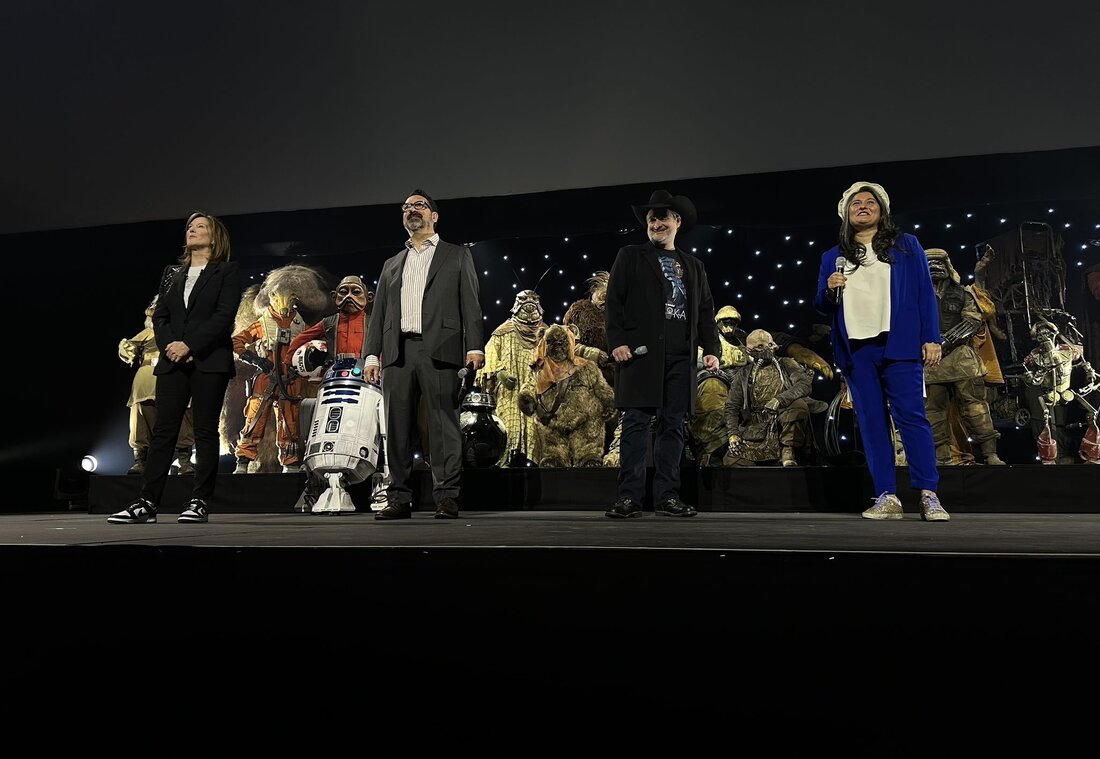
The details he shared were remarkable. San Diego Comic-Con was actually the second convention Star Wars attended, not the first. The 12 parsecs line from A New Hope — long mocked as a scientific error — was deliberate, George Lucas explained to Craig: Han Solo is lying. He's a hustler, and Obi-Wan's expression in that scene, once you know what to look for, says everything. I've seen that scene more times than I can count, and I will never watch it the same way again. Craig also shared how The Empire Strikes Back got its name — producer Gary Kurtz was being hounded by the press in Japan, everyone desperate to know the sequel's title. Annoyed and exhausted, he threw out "The Empire Strikes Back" just to make them stop. It was never meant to be the real title. They printed it, and it stuck. One of the most iconic film titles in history came from a moment of frustration. There were quieter moments too. Leigh Brackett, who wrote an early draft of Empire Strikes Back, passed away after turning in a draft of the script. Her friend Ray Bradbury — yes, that Ray Bradbury — offered to do any rewrites needed on the script for free, just so her name would stay on it. That kind of loyalty between legends of science fiction is something worth remembering. Craig also told the story of having to quietly retrieve a miniature Yoda from a minature Dagobah set at a convention — he wasn't supposed to be on display yet, and Craig had to sneak it away without anyone noticing. Just a regular day at a convention when you're Director of Fan Relations for the biggest film franchise on earth. When Craig's time ran out, the audience groaned. Audibly. He could have kept going for three more hours and nobody would have left their seat. That reaction said everything. This is a man who was there when Star Wars fandom was invented, who helped shape what it means to be a fan of something, and who still has stories that can make a room full of people lean forward in their chairs. Day two of WonderCon delivered in every way. A Batman in full costume sitting in on a droid engineering panel. A room of fans hearing stories from the man who was there at the very beginning. Overall it was a great day of panels and fandom! by James HerreraA Galaxy of Fandoms: My Day at WonderConWalking through the doors of WonderCon, I immediately knew this was going to be a good time. This wasn't your typical one-fandom event — this was a full-on celebration of nerd culture in every form. Within the first few minutes I spotted Ghostbusters, X-Men, The Mummy movie franchise cosplay, court jesters, and more anime cosplays than I could count. The vibes were good, the energy was high, and everyone there was genuinely excited to be in a room full of people who get it. Oh, and someone was walking around as Fred Flintstone, which was unexpected and awesome. Only to be rivaled by The Dude from The Big Lebowski, complete with a bowling ball bag and White Russian in his hand. One thing my friend and co-host of the Star Wars Stuff Podcast, Mari pointed out to me — was just how many Mandalorian cosplayers were there. And remember, this is not a Star Wars convention. This is an all-fandoms event. Yet Mandalorians were everywhere, and I think that says everything about where the fandom is right now. People love this show, they love the lore, and with The Mandalorian & Grogu movie dropping May 22nd, the hype is real. Safe to say the Star Wars community is alive and well! The highlight of my day was easily the Star Wars: Inside the Creatures, Droids and Puppetry panel — which, by the way, should have been in a much bigger room. They told us it was full just minutes before it started, and honestly that tracks because this panel was packed with incredible talent. Christine Galey, the first woman to ever play R2-D2, shared that she had no idea who or what she was auditioning for and was told to wait for Favreau and Filoni — that's when it clicked it was a big deal and that's when she saw the robot she would be operating. She also revealed that R2-D2 is one of Favreau's favorite Star Wars character. Chris Bartlett, who plays over 20 characters in Star Wars including C-3PO, even cracked a joke about the Book of Boba Fett speeder chase that got a good laugh from the crowd — and honestly, the way he said it, you could tell even he knew that sequence wasn't the best. TaMara Carlson Woodard revealed that the whiskers on the Loth-cat — her favorite puppet she's ever made — came from her actual cat, who, for the record, wanted nothing to do with Grogu she brought home. Dawn Dininger, who puppeteered Grogu at the Academy Awards, shared that they only found out a few weeks before the Oscars that Grogu would be there — and the puppet didn't have his arm rods. Conan noticed in rehearsal that Grogu couldn't clap, and that's literally why he made the joke on live TV. Two more panelists that really added to the conversation were Jacob Roanhaus and Jasper J. Anderson. Jacob does creature work and special effects makeup, and he's also worked on Marvel films handling superhero suits — but what really came through was his love for Jabba's Palace. He grew up fascinated by those creatures, and now he actually gets to play one in the new Star Wars shows. Jasper, who also came up through Legacy Effects, landed on Star Wars almost by accident — the team was stretched thin across multiple productions and needed a second crew, and that opening is what got him in the door. He also dropped an interesting tidbit for Skeleton Crew fans — apparently a lot of pirate content was filmed that never made it into the show. As someone who loved that series, I need those scenes released immediately. Both Jacob and Jasper, along with the rest of the panel, also touched on the fact that on set they weren't just doing creature work and effects — they were puppeteering their own droids at the same time. They all agreed this made some of the production days a little challenging. What really stuck with me leaving that panel was the conversation about AI. These incredibly skilled performers — puppeteers, creature performers, suit specialists — were not scared. They pointed out that they went through this same fear when CGI was taking over, and they came out the other side just fine. Their belief? Audiences want practical effects. There's something real and tangible about a puppet or a creature suit that CGI just can't replicate, and the fact that Grogu — one of the most beloved characters in modern Star Wars — is a practical puppet operated by five people is proof of that. It was a great reminder that the craft is alive, the passion is there, and May 22nd can't come soon enough. Day one of WonderCon did not disappoint — and I cannot wait to see what day two has in store.
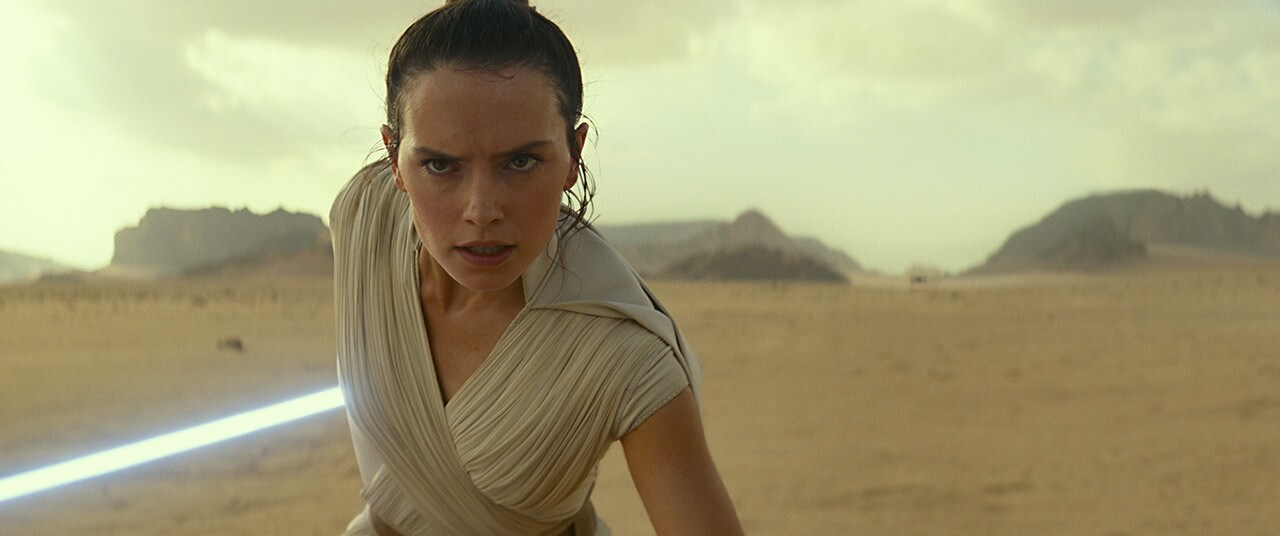
By James Herrera Disney announced today that Darth Vader would be coming to Batuu on April 29th, 2026. This is a huge deal. Galaxy's Edge has famously been stuck in a time loop between The Last Jedi and The Rise of Skywalker. For a few years, people have complained that they want to see the OG characters walking around. But it doesn't make sense for the storyline it follows. Bringing out Luke Skywalker to Galaxy's Edge was a big deal; it showed they were starting to deviate from the sacred timeline they had created. Now we find out that THE Darth Vader will be walking around Batuu! And what's better? He's looking for Luke now. Meaning they are shifting the timeline, so it's not just a character appearance, it's a new plot for the land! Leia and Han Solo will also be making their debut! Rey will remain at the park but will be mostly around Rise of the Resistance. I think this is a great thing Disney is doing. They're listening to the fans. The parks and the timeline were a good idea, but it can't work with Star Wars. The story is growing every year. New adventures are beginning, new characters are introduced, that fans want to see and experience
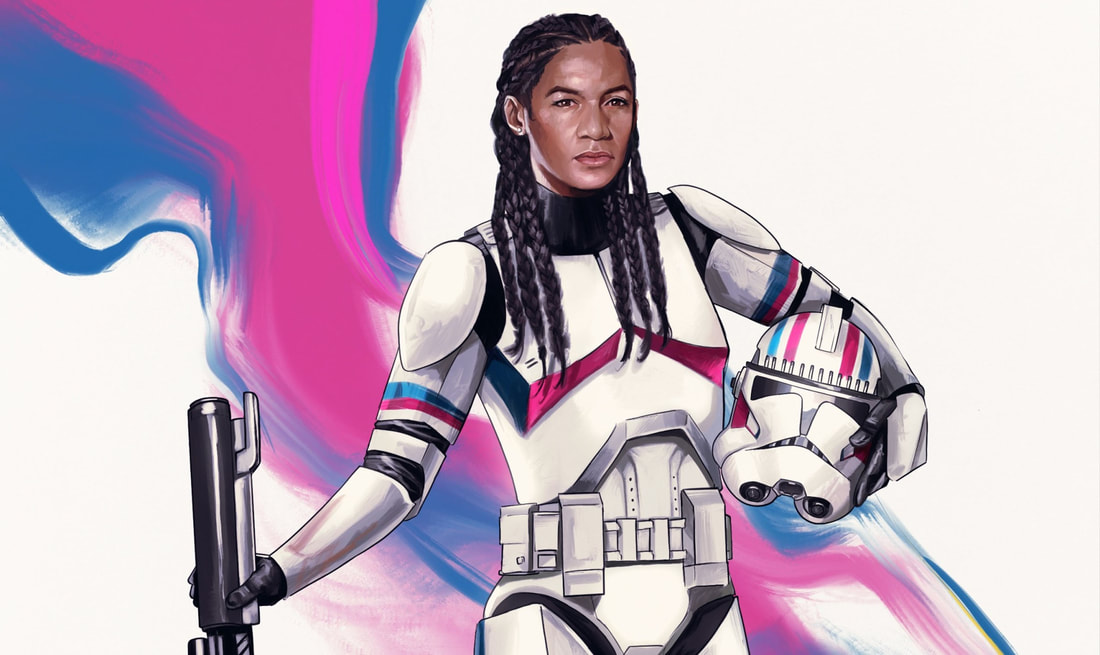
With Star Wars, stories have come and gone as well. And those stories are what most of us have grown up with. Not wanting to take away anything from new fans of the Sequels (which I love), but it wouldn't hurt to go back and see a few adventures from Han, Luke, and Leia battling Darth Vader and the Empire. And Disney finally figured this out. Most people had this in mind when the parks were announced in 2015 by Bob Iger. We had ideas of seeing our beloved characters walking around, interacting with them, and getting great photos with them. Here's what’s suspicious... Rise of the Resistance is closing for refurbishment starting this month. Are they going to be changing a few things to coincide with seeing Vader, Han, Luke, and Leia? Will the First Order Troopers be replaced with Storm Troopers? Will Rey's hologram message be changed to Leia? Or even Luke? Most likely. No, no, this will not happen. The amount of money, time, and planning that needs to go into doing this kind of change is way too much. But it is always nice to dream. While I'm dreaming, could they ever do a prequel era at Galaxy's Edge? Have Anakin, Ahsoka, Obi-Wan, and Clone Troopers walking around? Could you imagine that? Anakin and Obi-Wan in their Clone Wars outfits?! This would be a big deal considering how massive the prequel era has gotten over the last ten years. But one change at a time. I'm just glad that Disney is doing something drastic and what the fans want. But the trick will be making sure everyone is okay when they switch back to the sequel trilogy. We'll be there April 29th to bring you all the coverage for this awesome change at Galaxy's Edge! MTFBWY! |
Categories |
RSS Feed